Theogony
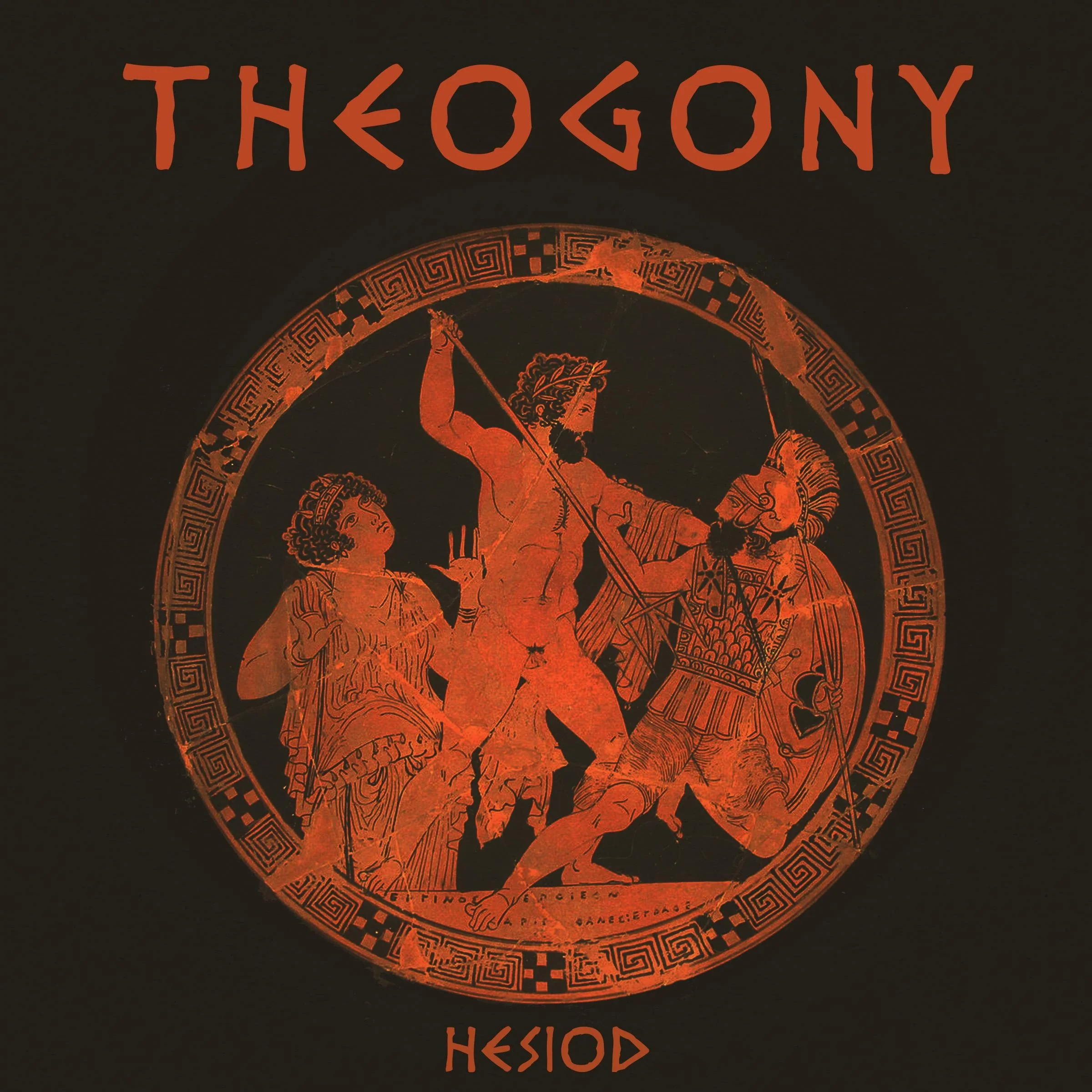
Hesiod was an ancient Greek poet, thought by scholars to have been active between 750 and 650 BC. Hesiod's 'Theogony' is a poem describing the origins and genealogies of the Greek gods. It was sourced from various local traditions about the gods, synthesized and organized as a narrative that reveals their origin and the history of their rule over the cosmos. Hesiod declares - in the "Kings and Singers" passage - that it is upon him, the poet, that the Muses have bestowed the visible signs of kingship, a sceptre and an authoritative voice. This means that the authority of kingship now belongs to the poet, the voice declaiming the Theogony. Instead of being a definitive source of Greek mythology, the Theogony is a snapshot of a dynamic tradition frozen in time.
Hesiod was an ancient Greek poet, thought by scholars to have been active between 750 and 650 BC. Hesiod's 'Theogony' is a poem describing the origins and genealogies of the Greek gods. It was sourced from various local traditions about the gods, synthesized and organized as a narrative that reveals their origin and the history of their rule over the cosmos. Hesiod declares - in the "Kings and Singers" passage - that it is upon him, the poet, that the Muses have bestowed the visible signs of kingship, a sceptre and an authoritative voice. This means that the authority of kingship now belongs to the poet, the voice declaiming the Theogony. Instead of being a definitive source of Greek mythology, the Theogony is a snapshot of a dynamic tradition frozen in time.
Description
Hesiod was an ancient Greek poet, thought by scholars to have been active between 750 and 650 BC. Hesiod's 'Theogony' is a poem describing the origins and genealogies of the Greek gods. It was sourced from various local traditions about the gods, synthesized and organized as a narrative that reveals their origin and the history of their rule over the cosmos. Hesiod declares - in the "Kings and Singers" passage - that it is upon him, the poet, that the Muses have bestowed the visible signs of kingship, a sceptre and an authoritative voice. This means that the authority of kingship now belongs to the poet, the voice declaiming the Theogony. Instead of being a definitive source of Greek mythology, the Theogony is a snapshot of a dynamic tradition frozen in time.