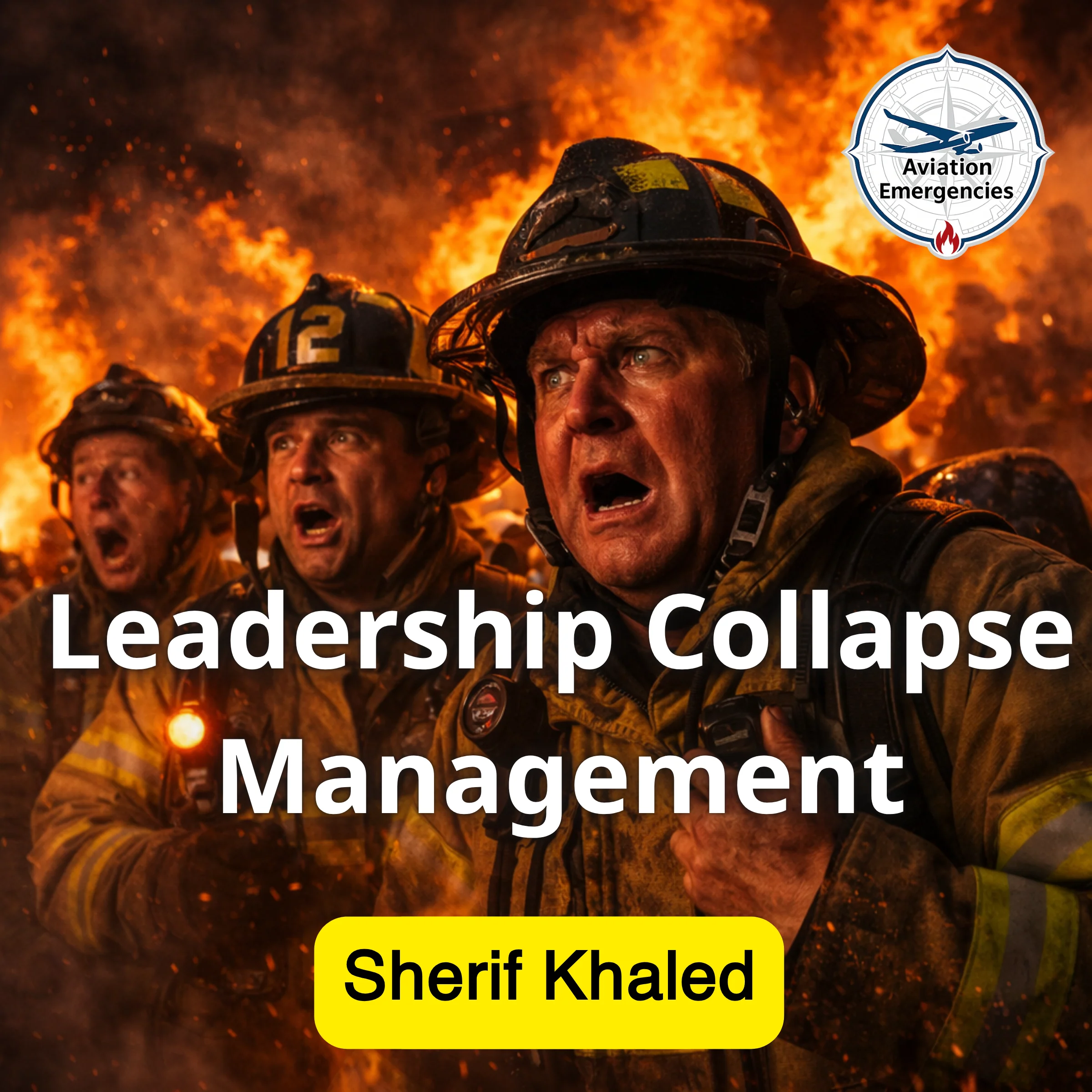
Leadership Collapse Management
Leadership Collapse Management is the ability to maintain decision stability and mental composure at the very moments when pressure begins to dismantle the leader's internal structure. It is not merely a skill for handling the incident, but a discipline for protecting the mind that manages the incident.
In high-risk emergency environments, collapse does not occur suddenly; it builds gradually through confusion, fatigue, conflicting information, and accelerating time. With every unmanaged moment of weakness, decisions begin to drift, and the team starts losing balance.
A leader who understands collapse management does not wait for failure to occur. Instead, they detect early warning signs, recalibrate their mental rhythm, and restore clarity before pressure turns into loss of control. It is an internal battle as much as it is a field battle-where true victory lies in keeping the mind steady when everything else begins to fall apart.
Leadership Collapse Management is the ability to maintain decision stability and mental composure at the very moments when pressure begins to dismantle the leader's internal structure. It is not merely a skill for handling the incident, but a discipline for protecting the mind that manages the incident.
In high-risk emergency environments, collapse does not occur suddenly; it builds gradually through confusion, fatigue, conflicting information, and accelerating time. With every unmanaged moment of weakness, decisions begin to drift, and the team starts losing balance.
A leader who understands collapse management does not wait for failure to occur. Instead, they detect early warning signs, recalibrate their mental rhythm, and restore clarity before pressure turns into loss of control. It is an internal battle as much as it is a field battle-where true victory lies in keeping the mind steady when everything else begins to fall apart.
Description
Leadership Collapse Management is the ability to maintain decision stability and mental composure at the very moments when pressure begins to dismantle the leader's internal structure. It is not merely a skill for handling the incident, but a discipline for protecting the mind that manages the incident.
In high-risk emergency environments, collapse does not occur suddenly; it builds gradually through confusion, fatigue, conflicting information, and accelerating time. With every unmanaged moment of weakness, decisions begin to drift, and the team starts losing balance.
A leader who understands collapse management does not wait for failure to occur. Instead, they detect early warning signs, recalibrate their mental rhythm, and restore clarity before pressure turns into loss of control. It is an internal battle as much as it is a field battle-where true victory lies in keeping the mind steady when everything else begins to fall apart.