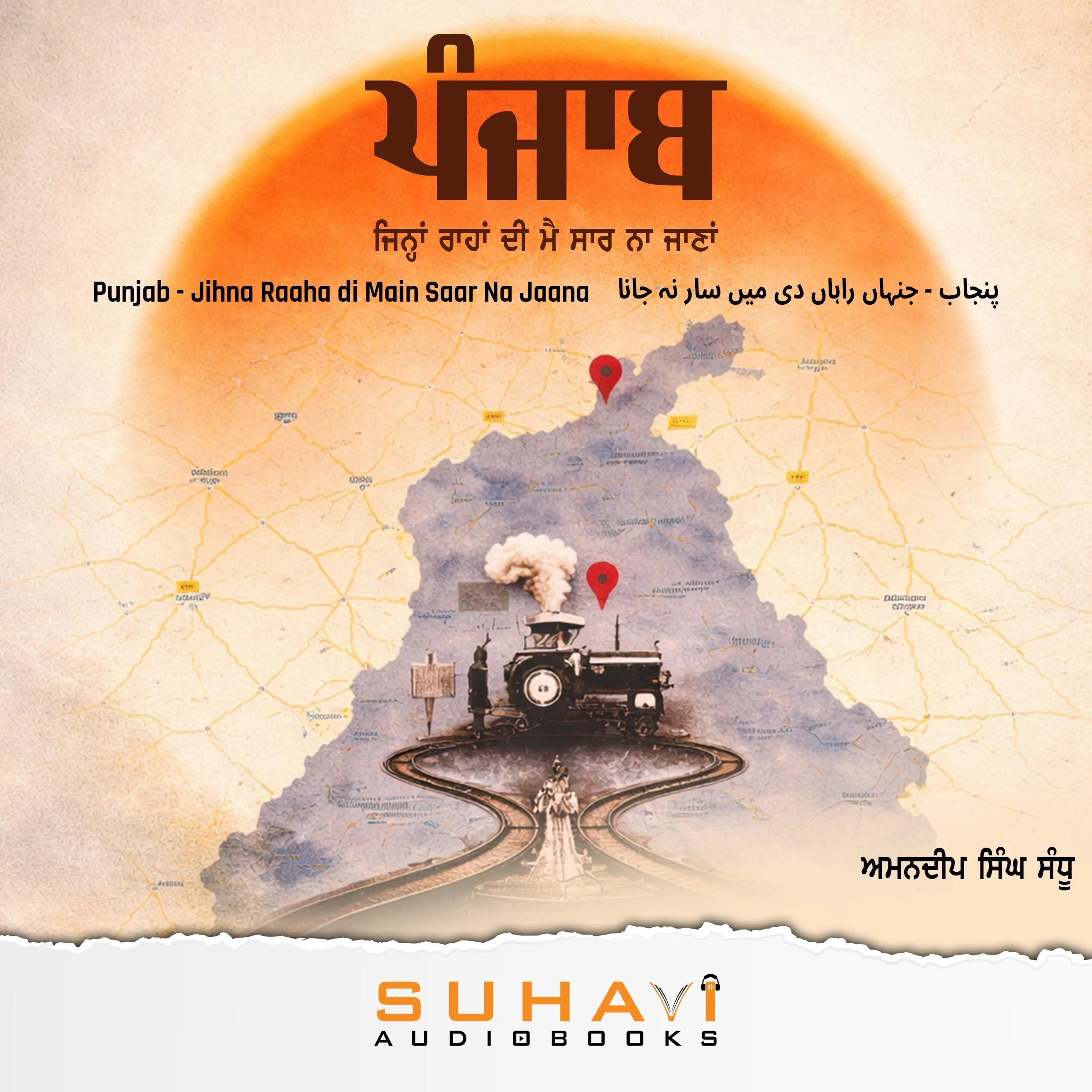
Punjab - Jihna Raaha di Main Saar Na Jaana
The English book "Yanar" written by Amandeep Singh Sandhu challenges existing boundaries. Its Punjabi translation was done by Yadvinder Singh and Mangat Ram. This book can be classified as journalism, memoir, and novel all at once. Many decades ago, a similar book called "Aag Ka Darya" (by Qurratul Ain Haider) was written, which explored the idea of "Hindustaniyat" (Indian identity). In this book, Sandhu searches for "Punjabiat" (Punjabi identity). According to him, simplicity and resistance are key traits of Punjabiat. Amandeep Singh spent his early years in the industrial city of Rourkela in India. During that time, he saw Punjab in small glimpses. People from other Indian states have different ideas about Punjab. When they think of "Punjab," images of Sikhs, bhangra, bandits, gurdwaras, langar, Khalistan, Green Revolution, dhol, butter chicken, and the five rivers come to mind. But is Punjab only this? The story in the book spans from 1913 to 1918, but it also takes readers on a deeper journey-from the culture of Sindh Valley to the rise of common people's parties. It discusses major political groups and figures like Congress, Communist parties, Akali Party, Bhindranwala, Prakash Singh Badal, Captain Amarinder Singh, and Kejriwal. It also covers the work of key religious and social groups in Punjab, including prominent dera leaders, Radha Soami, Sacha Sauda, Nirankari, and Sant Ballan Wale.
The English book "Yanar" written by Amandeep Singh Sandhu challenges existing boundaries. Its Punjabi translation was done by Yadvinder Singh and Mangat Ram. This book can be classified as journalism, memoir, and novel all at once. Many decades ago, a similar book called "Aag Ka Darya" (by Qurratul Ain Haider) was written, which explored the idea of "Hindustaniyat" (Indian identity). In this book, Sandhu searches for "Punjabiat" (Punjabi identity). According to him, simplicity and resistance are key traits of Punjabiat. Amandeep Singh spent his early years in the industrial city of Rourkela in India. During that time, he saw Punjab in small glimpses. People from other Indian states have different ideas about Punjab. When they think of "Punjab," images of Sikhs, bhangra, bandits, gurdwaras, langar, Khalistan, Green Revolution, dhol, butter chicken, and the five rivers come to mind. But is Punjab only this? The story in the book spans from 1913 to 1918, but it also takes readers on a deeper journey-from the culture of Sindh Valley to the rise of common people's parties. It discusses major political groups and figures like Congress, Communist parties, Akali Party, Bhindranwala, Prakash Singh Badal, Captain Amarinder Singh, and Kejriwal. It also covers the work of key religious and social groups in Punjab, including prominent dera leaders, Radha Soami, Sacha Sauda, Nirankari, and Sant Ballan Wale.
Description
The English book "Yanar" written by Amandeep Singh Sandhu challenges existing boundaries. Its Punjabi translation was done by Yadvinder Singh and Mangat Ram. This book can be classified as journalism, memoir, and novel all at once. Many decades ago, a similar book called "Aag Ka Darya" (by Qurratul Ain Haider) was written, which explored the idea of "Hindustaniyat" (Indian identity). In this book, Sandhu searches for "Punjabiat" (Punjabi identity). According to him, simplicity and resistance are key traits of Punjabiat. Amandeep Singh spent his early years in the industrial city of Rourkela in India. During that time, he saw Punjab in small glimpses. People from other Indian states have different ideas about Punjab. When they think of "Punjab," images of Sikhs, bhangra, bandits, gurdwaras, langar, Khalistan, Green Revolution, dhol, butter chicken, and the five rivers come to mind. But is Punjab only this? The story in the book spans from 1913 to 1918, but it also takes readers on a deeper journey-from the culture of Sindh Valley to the rise of common people's parties. It discusses major political groups and figures like Congress, Communist parties, Akali Party, Bhindranwala, Prakash Singh Badal, Captain Amarinder Singh, and Kejriwal. It also covers the work of key religious and social groups in Punjab, including prominent dera leaders, Radha Soami, Sacha Sauda, Nirankari, and Sant Ballan Wale.