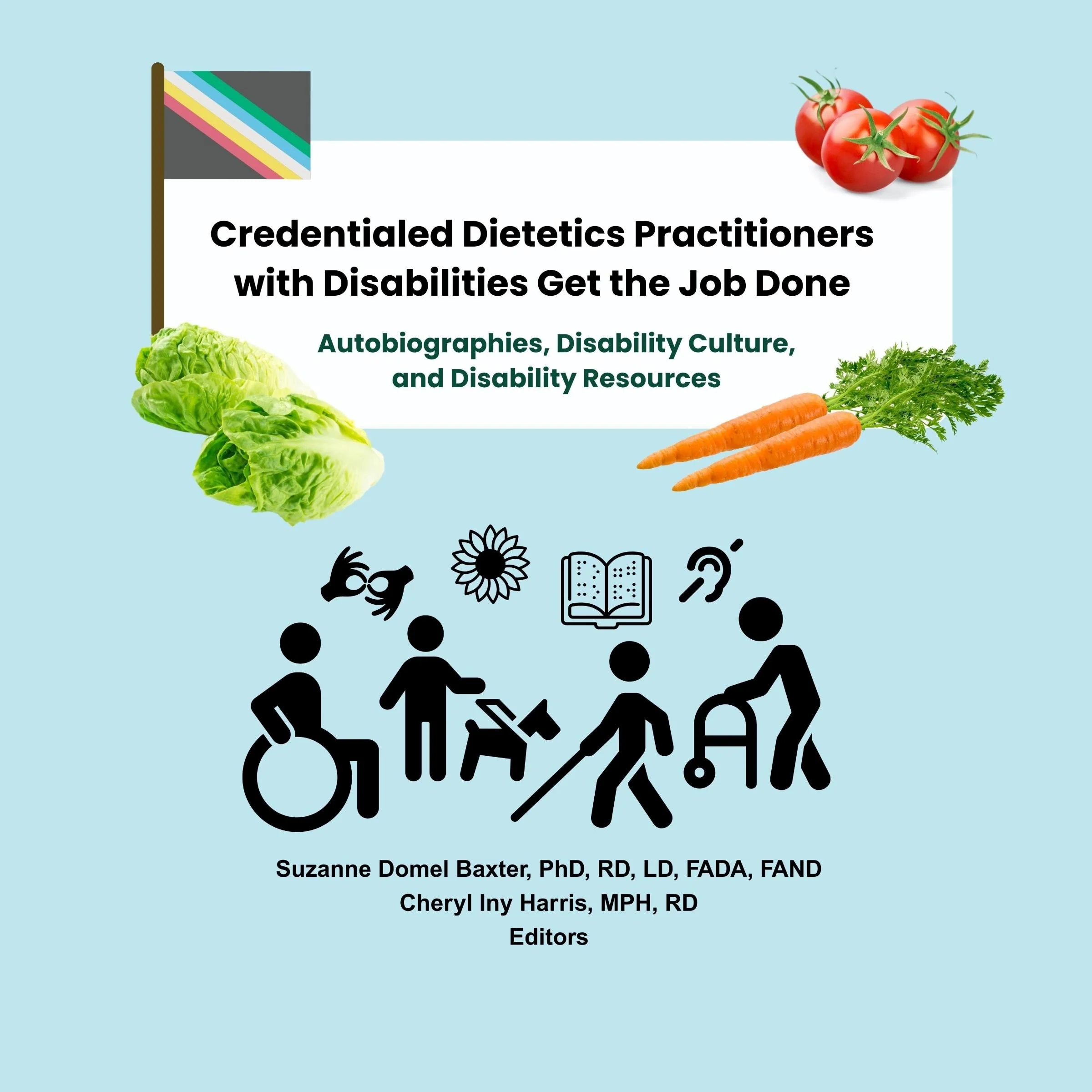
Credentialed Dietetics Practitioners with Disabilities Get the Job Done
Dietetics practitioners are food and nutrition experts who help people live healthier lives. They work in various settings from hospitals and research labs to sports teams, schools, nursing homes, and the food industry. Yet, despite the diversity of the populations they serve, the dietetics profession remains predominantly female, white, and able-bodied. Only 2% of dietetics practitioners self-identify as having a disability, compared to 29% of U.S. adults.
There is a growing and urgent need for more credentialed dietetics practitioners overall, and more with disabilities.
This powerful and inspiring book features the autobiographies of 15 credentialed dietetics practitioners with disabilities, who share their lived experiences navigating:
College and academic accommodations
Supervised practice internships
National credentialing exams
Employment, workplace access, and disability disclosure
Disability culture around food, nutrition, and eating
Their disabilities include cerebral palsy, spinal cord injuries, vision and hearing impairments, mobility disabilities, and chronic illnesses.
The book also includes eight educational chapters on topics including:
The Academy of Nutrition and Dietetics
The Disabilities in Nutrition and Dietetics Member Interest Group
The profession and how to become a dietetics practitioner
Disability resources
Disability statistics
State vocational rehabilitation programs and centers for independent living
This book is an essential resource for:
Individuals with disabilities exploring careers in dietetics or other healthcare professions
Dietetics and healthcare students/interns with disabilities
Educators, preceptors, managers, and supervisors
Career counselors and disability services professionals
Allies, family members, and colleagues of people with disabilities
All book royalties are donated to efforts to enhance disability inclusivity in the dietetics workforce and/or to educate it about disabilities.
Dietetics practitioners are food and nutrition experts who help people live healthier lives. They work in various settings from hospitals and research labs to sports teams, schools, nursing homes, and the food industry. Yet, despite the diversity of the populations they serve, the dietetics profession remains predominantly female, white, and able-bodied. Only 2% of dietetics practitioners self-identify as having a disability, compared to 29% of U.S. adults.
There is a growing and urgent need for more credentialed dietetics practitioners overall, and more with disabilities.
This powerful and inspiring book features the autobiographies of 15 credentialed dietetics practitioners with disabilities, who share their lived experiences navigating:
College and academic accommodations
Supervised practice internships
National credentialing exams
Employment, workplace access, and disability disclosure
Disability culture around food, nutrition, and eating
Their disabilities include cerebral palsy, spinal cord injuries, vision and hearing impairments, mobility disabilities, and chronic illnesses.
The book also includes eight educational chapters on topics including:
The Academy of Nutrition and Dietetics
The Disabilities in Nutrition and Dietetics Member Interest Group
The profession and how to become a dietetics practitioner
Disability resources
Disability statistics
State vocational rehabilitation programs and centers for independent living
This book is an essential resource for:
Individuals with disabilities exploring careers in dietetics or other healthcare professions
Dietetics and healthcare students/interns with disabilities
Educators, preceptors, managers, and supervisors
Career counselors and disability services professionals
Allies, family members, and colleagues of people with disabilities
All book royalties are donated to efforts to enhance disability inclusivity in the dietetics workforce and/or to educate it about disabilities.
Description
Dietetics practitioners are food and nutrition experts who help people live healthier lives. They work in various settings from hospitals and research labs to sports teams, schools, nursing homes, and the food industry. Yet, despite the diversity of the populations they serve, the dietetics profession remains predominantly female, white, and able-bodied. Only 2% of dietetics practitioners self-identify as having a disability, compared to 29% of U.S. adults.
There is a growing and urgent need for more credentialed dietetics practitioners overall, and more with disabilities.
This powerful and inspiring book features the autobiographies of 15 credentialed dietetics practitioners with disabilities, who share their lived experiences navigating:
College and academic accommodations
Supervised practice internships
National credentialing exams
Employment, workplace access, and disability disclosure
Disability culture around food, nutrition, and eating
Their disabilities include cerebral palsy, spinal cord injuries, vision and hearing impairments, mobility disabilities, and chronic illnesses.
The book also includes eight educational chapters on topics including:
The Academy of Nutrition and Dietetics
The Disabilities in Nutrition and Dietetics Member Interest Group
The profession and how to become a dietetics practitioner
Disability resources
Disability statistics
State vocational rehabilitation programs and centers for independent living
This book is an essential resource for:
Individuals with disabilities exploring careers in dietetics or other healthcare professions
Dietetics and healthcare students/interns with disabilities
Educators, preceptors, managers, and supervisors
Career counselors and disability services professionals
Allies, family members, and colleagues of people with disabilities
All book royalties are donated to efforts to enhance disability inclusivity in the dietetics workforce and/or to educate it about disabilities.