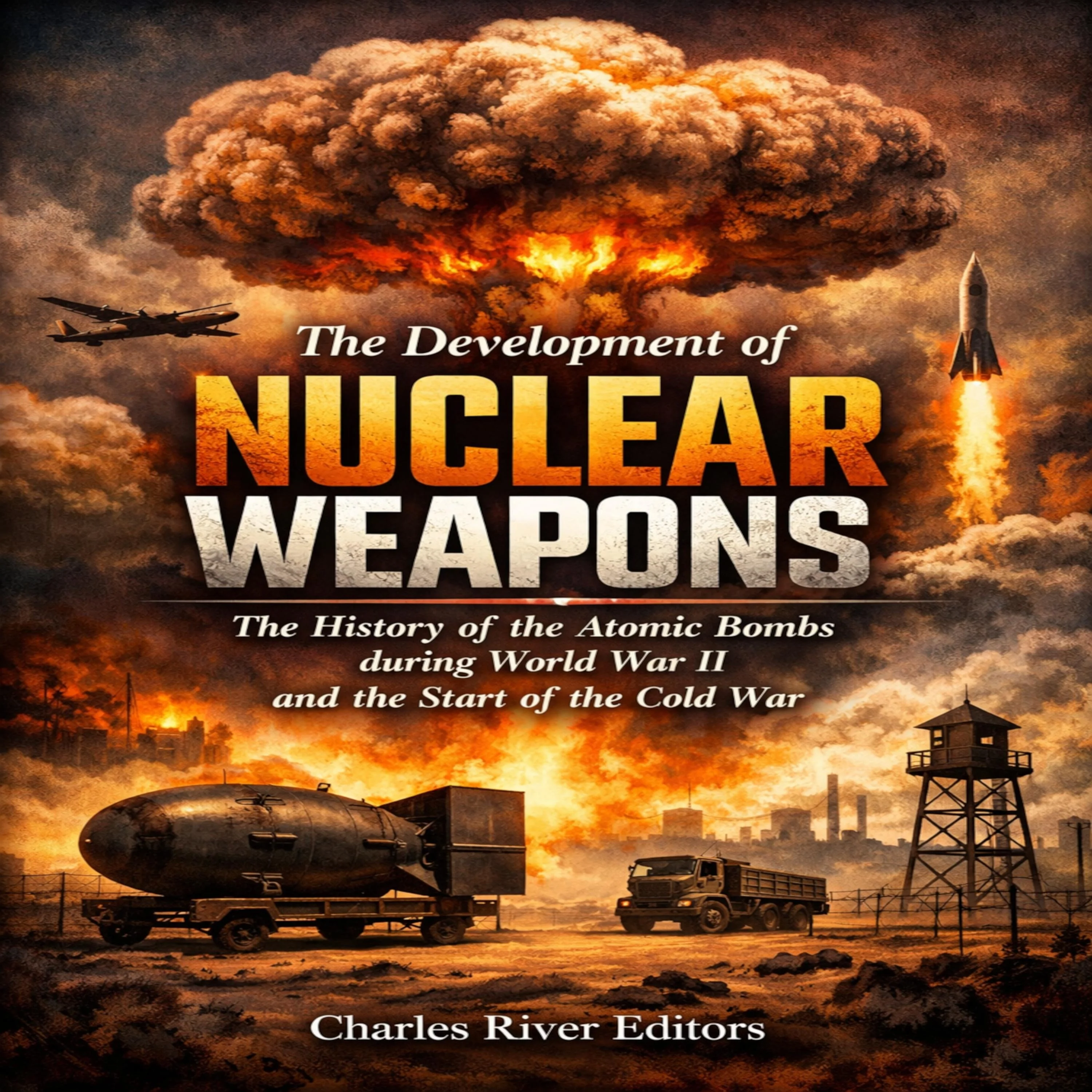
The Development of Nuclear Weapons: The History of the Atomic Bombs during World War II and the Start of the Cold War
Tens of millions died during World War II as the warring powers raced to create the best fighter planes, tanks, and guns, and eventually that race extended to bombs which carried enough power to destroy civilization itself. While the war raged in Europe and the Pacific, a dream team of Nobel Laureates was working on the Manhattan Project, a program kept so secret that Vice President Harry Truman didn't know about it until he took the presidency after FDR's death in April 1945.
The Manhattan Project would ultimately yield the "Little Boy" and "Fat Man" bombs that released more than 100 Terajoules of energy at Hiroshima and Nagasaki, but as it turned out, the Axis were not far behind with their own nuclear weapons program. When the Nazis' quest for a nuclear weapon began in earnest in 1939, no one really had a handle on how important nuclear weapons would prove to war and geopolitics, so the Germans were hesitant to expend resources on it. Moreover, they were hampered by the fact their policies had compelled Jewish scientists like Liz Meitner and Albert Einstein to flee before the war.
Although their project is typically overlooked given the American use of the bombs and then the Soviets following suit early on in the Cold War, the Japanese avidly pursued nuclear weapons as well. As with the Nazis, the lack of research and the general course of the war prevented them from making the necessary technological advancements that would result in a usable bomb.
For their part, Stalin's regime had been working on a nuclear weapons program since 1942, relying greatly upon successful Soviet espionage to help lead the way. With intelligence sources connected to the Manhattan Project, Stalin was able to keep abreast of the Allies' progress toward creating an atomic bomb, so that by 1945, the Soviets already had a working blueprint of America's first atomic bombs.
Tens of millions died during World War II as the warring powers raced to create the best fighter planes, tanks, and guns, and eventually that race extended to bombs which carried enough power to destroy civilization itself. While the war raged in Europe and the Pacific, a dream team of Nobel Laureates was working on the Manhattan Project, a program kept so secret that Vice President Harry Truman didn't know about it until he took the presidency after FDR's death in April 1945.
The Manhattan Project would ultimately yield the "Little Boy" and "Fat Man" bombs that released more than 100 Terajoules of energy at Hiroshima and Nagasaki, but as it turned out, the Axis were not far behind with their own nuclear weapons program. When the Nazis' quest for a nuclear weapon began in earnest in 1939, no one really had a handle on how important nuclear weapons would prove to war and geopolitics, so the Germans were hesitant to expend resources on it. Moreover, they were hampered by the fact their policies had compelled Jewish scientists like Liz Meitner and Albert Einstein to flee before the war.
Although their project is typically overlooked given the American use of the bombs and then the Soviets following suit early on in the Cold War, the Japanese avidly pursued nuclear weapons as well. As with the Nazis, the lack of research and the general course of the war prevented them from making the necessary technological advancements that would result in a usable bomb.
For their part, Stalin's regime had been working on a nuclear weapons program since 1942, relying greatly upon successful Soviet espionage to help lead the way. With intelligence sources connected to the Manhattan Project, Stalin was able to keep abreast of the Allies' progress toward creating an atomic bomb, so that by 1945, the Soviets already had a working blueprint of America's first atomic bombs.
Original: $7.99
-65%$7.99
$2.80Description
Tens of millions died during World War II as the warring powers raced to create the best fighter planes, tanks, and guns, and eventually that race extended to bombs which carried enough power to destroy civilization itself. While the war raged in Europe and the Pacific, a dream team of Nobel Laureates was working on the Manhattan Project, a program kept so secret that Vice President Harry Truman didn't know about it until he took the presidency after FDR's death in April 1945.
The Manhattan Project would ultimately yield the "Little Boy" and "Fat Man" bombs that released more than 100 Terajoules of energy at Hiroshima and Nagasaki, but as it turned out, the Axis were not far behind with their own nuclear weapons program. When the Nazis' quest for a nuclear weapon began in earnest in 1939, no one really had a handle on how important nuclear weapons would prove to war and geopolitics, so the Germans were hesitant to expend resources on it. Moreover, they were hampered by the fact their policies had compelled Jewish scientists like Liz Meitner and Albert Einstein to flee before the war.
Although their project is typically overlooked given the American use of the bombs and then the Soviets following suit early on in the Cold War, the Japanese avidly pursued nuclear weapons as well. As with the Nazis, the lack of research and the general course of the war prevented them from making the necessary technological advancements that would result in a usable bomb.
For their part, Stalin's regime had been working on a nuclear weapons program since 1942, relying greatly upon successful Soviet espionage to help lead the way. With intelligence sources connected to the Manhattan Project, Stalin was able to keep abreast of the Allies' progress toward creating an atomic bomb, so that by 1945, the Soviets already had a working blueprint of America's first atomic bombs.