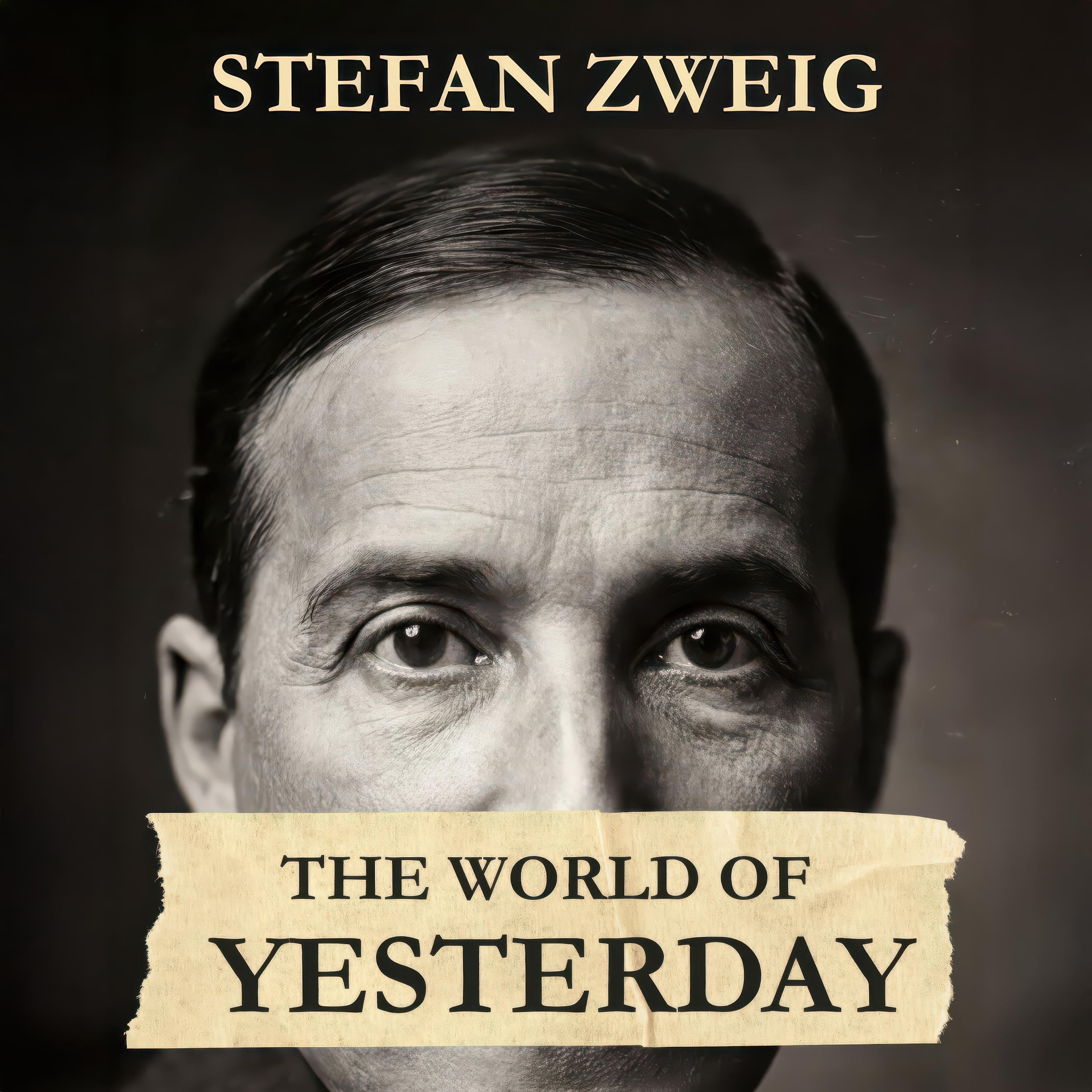
The World of Yesterday
The most haunting memoir of the twentieth century-written in exile, published after death.
Stefan Zweig was born into the golden age of European civilization-a world that believed in progress, treasured culture over nationalism, and thought peace permanent. From Vienna, he witnessed the last flowering of cosmopolitan humanism. He knew Rilke, Freud, and Richard Strauss. By the 1920s, he was one of the most translated authors in the world.
Then he watched that civilization destroy itself.
The World of Yesterday captures what was lost: the brilliance of pre-war Vienna, the madness of 1914's patriotic fever, the hyperinflation that gutted Austria's middle class, the rise of Hitler and Mussolini, the nightmare of exile. Writing from memory alone, Zweig creates something more valuable than autobiography: a meditation on civilization's fragility by a witness who understood exactly what was being destroyed.
This is warning and prophecy. Zweig describes how quickly democratic norms collapsed, how antisemitism erupted where Jews felt integrated, how culture proved defenseless against barbarism. Neighbors became enemies. Cosmopolitan ideals gave way to tribal hatred.
The memoir was completed in Brazil in February 1942. The next day, Zweig and his wife ended their lives. He could not survive the destruction of everything he valued-but he left us this book: eloquent, heartbroken, clear-eyed.
For readers in our own uncertain era, The World of Yesterday speaks with uncomfortable urgency. Civilization is never guaranteed-it must be defended, or it will be lost.
The essential memoir of European catastrophe. Required reading for our age.
The most haunting memoir of the twentieth century-written in exile, published after death.
Stefan Zweig was born into the golden age of European civilization-a world that believed in progress, treasured culture over nationalism, and thought peace permanent. From Vienna, he witnessed the last flowering of cosmopolitan humanism. He knew Rilke, Freud, and Richard Strauss. By the 1920s, he was one of the most translated authors in the world.
Then he watched that civilization destroy itself.
The World of Yesterday captures what was lost: the brilliance of pre-war Vienna, the madness of 1914's patriotic fever, the hyperinflation that gutted Austria's middle class, the rise of Hitler and Mussolini, the nightmare of exile. Writing from memory alone, Zweig creates something more valuable than autobiography: a meditation on civilization's fragility by a witness who understood exactly what was being destroyed.
This is warning and prophecy. Zweig describes how quickly democratic norms collapsed, how antisemitism erupted where Jews felt integrated, how culture proved defenseless against barbarism. Neighbors became enemies. Cosmopolitan ideals gave way to tribal hatred.
The memoir was completed in Brazil in February 1942. The next day, Zweig and his wife ended their lives. He could not survive the destruction of everything he valued-but he left us this book: eloquent, heartbroken, clear-eyed.
For readers in our own uncertain era, The World of Yesterday speaks with uncomfortable urgency. Civilization is never guaranteed-it must be defended, or it will be lost.
The essential memoir of European catastrophe. Required reading for our age.
Description
The most haunting memoir of the twentieth century-written in exile, published after death.
Stefan Zweig was born into the golden age of European civilization-a world that believed in progress, treasured culture over nationalism, and thought peace permanent. From Vienna, he witnessed the last flowering of cosmopolitan humanism. He knew Rilke, Freud, and Richard Strauss. By the 1920s, he was one of the most translated authors in the world.
Then he watched that civilization destroy itself.
The World of Yesterday captures what was lost: the brilliance of pre-war Vienna, the madness of 1914's patriotic fever, the hyperinflation that gutted Austria's middle class, the rise of Hitler and Mussolini, the nightmare of exile. Writing from memory alone, Zweig creates something more valuable than autobiography: a meditation on civilization's fragility by a witness who understood exactly what was being destroyed.
This is warning and prophecy. Zweig describes how quickly democratic norms collapsed, how antisemitism erupted where Jews felt integrated, how culture proved defenseless against barbarism. Neighbors became enemies. Cosmopolitan ideals gave way to tribal hatred.
The memoir was completed in Brazil in February 1942. The next day, Zweig and his wife ended their lives. He could not survive the destruction of everything he valued-but he left us this book: eloquent, heartbroken, clear-eyed.
For readers in our own uncertain era, The World of Yesterday speaks with uncomfortable urgency. Civilization is never guaranteed-it must be defended, or it will be lost.
The essential memoir of European catastrophe. Required reading for our age.