The Preemptive Strike Won't Be Nuclear
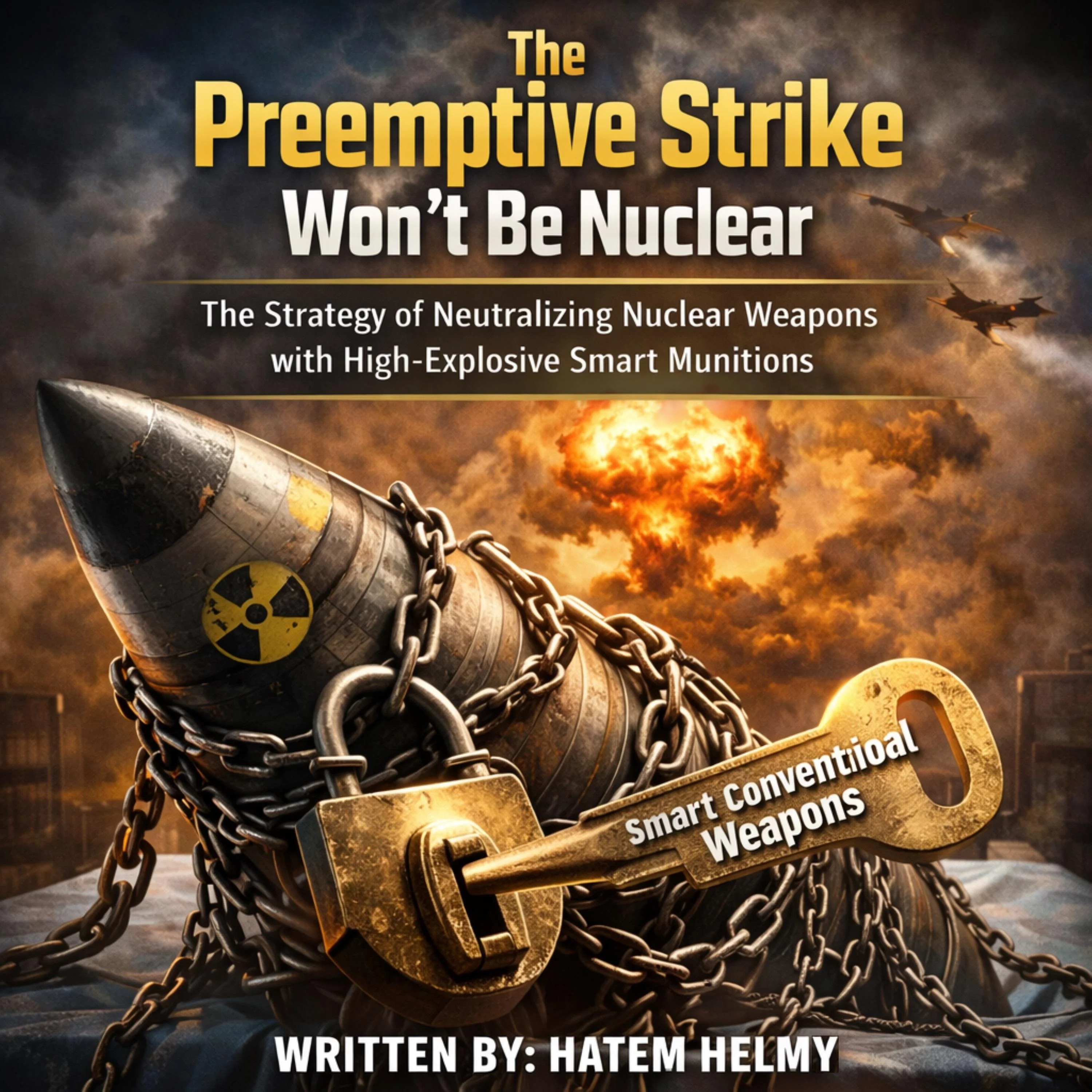
The Preemptive Strike Won't Be Nuclear
The Strategy of Neutralizing Nuclear Weapons with High-Explosive Smart Munitions
In the annals of human conflict, power has always been measured by size, force, and the visible capacity to dominate. Armies march across borders, fleets patrol oceans, and nuclear arsenals loom like dormant titans. History teaches us that these tangible forms of power-economic might, territorial control, and military mass-often decide the fates of nations. Yet, as we step into the third decade of the twenty-first century, the landscape of strategic dominance has undergone a transformation as profound as it is disorienting. The conventional markers of might have given way to precision, stealth, and asymmetry. The terrifying symmetry of mass destruction no longer guarantees control; instead, vulnerability hides within interdependence, and exposure emerges in the spaces once considered impregnable.
This book seeks to illuminate the unfolding crisis between the United States and Israel, on one hand, and the so-called Eastern Axis-China, Russia, Iran, and North Korea-on the other. At first glance, this confrontation appears a struggle between two blocs: the industrial and technological colossus of the West versus the vast, resource-rich, and militarily formidable East. But beneath the surface lies a paradox of power: a coalition possessing enormous muscle yet confronting existential weaknesses exposed by the subtleties of modern warfare.
The Preemptive Strike Won't Be Nuclear
The Strategy of Neutralizing Nuclear Weapons with High-Explosive Smart Munitions
In the annals of human conflict, power has always been measured by size, force, and the visible capacity to dominate. Armies march across borders, fleets patrol oceans, and nuclear arsenals loom like dormant titans. History teaches us that these tangible forms of power-economic might, territorial control, and military mass-often decide the fates of nations. Yet, as we step into the third decade of the twenty-first century, the landscape of strategic dominance has undergone a transformation as profound as it is disorienting. The conventional markers of might have given way to precision, stealth, and asymmetry. The terrifying symmetry of mass destruction no longer guarantees control; instead, vulnerability hides within interdependence, and exposure emerges in the spaces once considered impregnable.
This book seeks to illuminate the unfolding crisis between the United States and Israel, on one hand, and the so-called Eastern Axis-China, Russia, Iran, and North Korea-on the other. At first glance, this confrontation appears a struggle between two blocs: the industrial and technological colossus of the West versus the vast, resource-rich, and militarily formidable East. But beneath the surface lies a paradox of power: a coalition possessing enormous muscle yet confronting existential weaknesses exposed by the subtleties of modern warfare.
Description
The Preemptive Strike Won't Be Nuclear
The Strategy of Neutralizing Nuclear Weapons with High-Explosive Smart Munitions
In the annals of human conflict, power has always been measured by size, force, and the visible capacity to dominate. Armies march across borders, fleets patrol oceans, and nuclear arsenals loom like dormant titans. History teaches us that these tangible forms of power-economic might, territorial control, and military mass-often decide the fates of nations. Yet, as we step into the third decade of the twenty-first century, the landscape of strategic dominance has undergone a transformation as profound as it is disorienting. The conventional markers of might have given way to precision, stealth, and asymmetry. The terrifying symmetry of mass destruction no longer guarantees control; instead, vulnerability hides within interdependence, and exposure emerges in the spaces once considered impregnable.
This book seeks to illuminate the unfolding crisis between the United States and Israel, on one hand, and the so-called Eastern Axis-China, Russia, Iran, and North Korea-on the other. At first glance, this confrontation appears a struggle between two blocs: the industrial and technological colossus of the West versus the vast, resource-rich, and militarily formidable East. But beneath the surface lies a paradox of power: a coalition possessing enormous muscle yet confronting existential weaknesses exposed by the subtleties of modern warfare.