🎉 Up to 70% Off Selected ItemsShop Sale
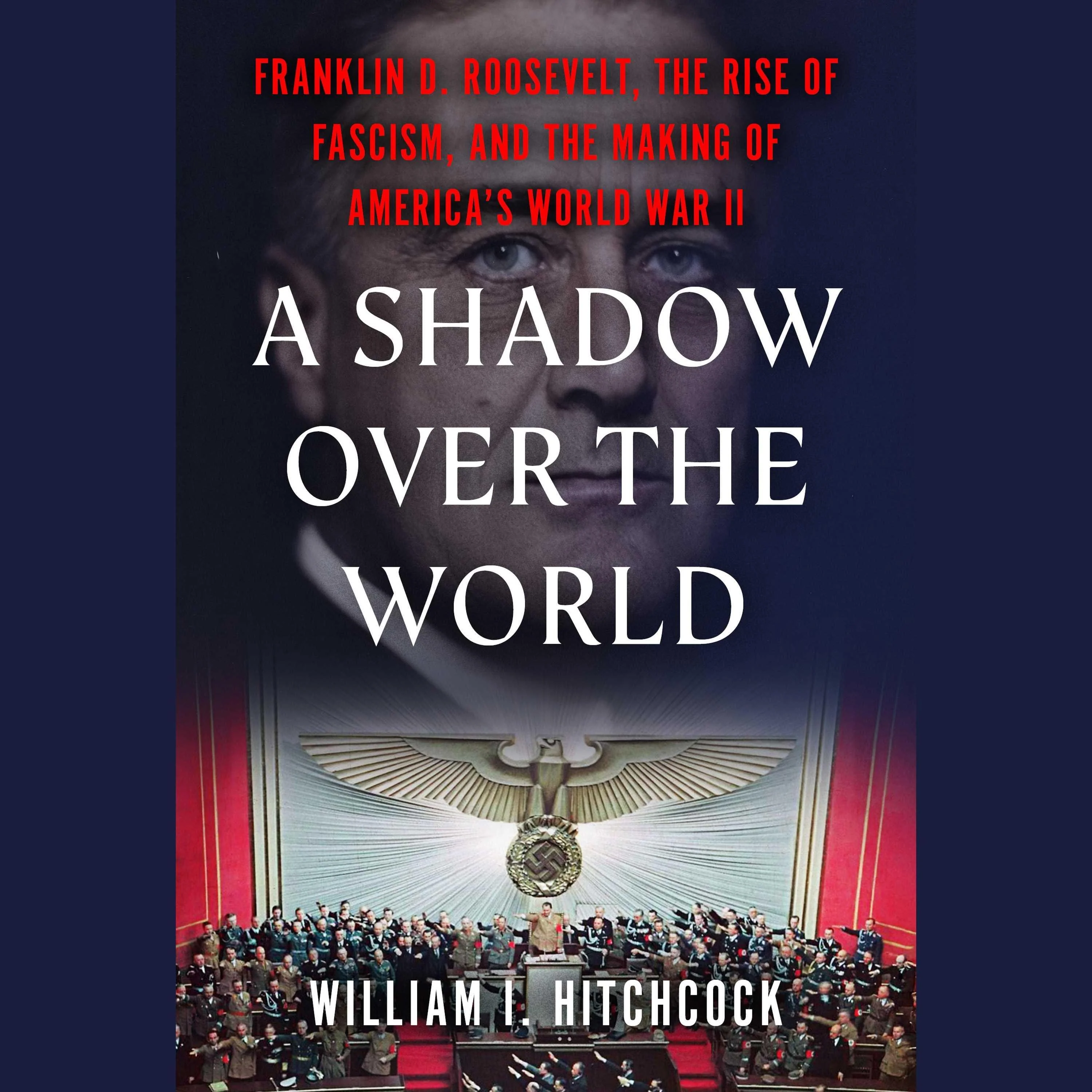
A Shadow Over the World
From New York Times bestselling author William I. Hitchcock, a riveting, revelatory portrait of Franklin Delano Roosevelt in the lead-up to World War II, tracing his—and America’s—awakening to the threat of fascism.
How did FDR and the American public respond to the rise of dictators across Europe and Asia on the eve of World War II? The familiar narrative is that they reacted with indifference and embraced isolationism. Only with the Japanese attack on Pearl Harbor were Americans reluctantly drawn into the global conflict. But distinguished historian William I. Hitchcock reveals a far more complex and surprising story.
From the time Mussolini came to power in 1922 to America’s entry into the war in 1941, Americans engaged in a fraught national debate over the rising threat—and for some, the lure—of fascism. At the center of this debate was Roosevelt himself. When he took office in 1933, Roosevelt was determined to avoid foreign entanglements that would harm his ambitious domestic agenda of the New Deal. But over the course of his first two terms, a network of journalists, activists, advisers, and diplomats gradually awakened him to the global dangers of fascism.
Roosevelt’s transformation was part of a larger national reckoning with authoritarianism around the world. A Shadow Over the World shines a light on a time when a coalition of courageous humanists gathered around a visionary leader to forge a new purpose for America: to protect democracy, oppose imperialism, support human rights, and lead a global fight for freedom. Their successful struggle against the dark forces of fascism holds powerful lessons for our own perilous times.
How did FDR and the American public respond to the rise of dictators across Europe and Asia on the eve of World War II? The familiar narrative is that they reacted with indifference and embraced isolationism. Only with the Japanese attack on Pearl Harbor were Americans reluctantly drawn into the global conflict. But distinguished historian William I. Hitchcock reveals a far more complex and surprising story.
From the time Mussolini came to power in 1922 to America’s entry into the war in 1941, Americans engaged in a fraught national debate over the rising threat—and for some, the lure—of fascism. At the center of this debate was Roosevelt himself. When he took office in 1933, Roosevelt was determined to avoid foreign entanglements that would harm his ambitious domestic agenda of the New Deal. But over the course of his first two terms, a network of journalists, activists, advisers, and diplomats gradually awakened him to the global dangers of fascism.
Roosevelt’s transformation was part of a larger national reckoning with authoritarianism around the world. A Shadow Over the World shines a light on a time when a coalition of courageous humanists gathered around a visionary leader to forge a new purpose for America: to protect democracy, oppose imperialism, support human rights, and lead a global fight for freedom. Their successful struggle against the dark forces of fascism holds powerful lessons for our own perilous times.
From New York Times bestselling author William I. Hitchcock, a riveting, revelatory portrait of Franklin Delano Roosevelt in the lead-up to World War II, tracing his—and America’s—awakening to the threat of fascism.
How did FDR and the American public respond to the rise of dictators across Europe and Asia on the eve of World War II? The familiar narrative is that they reacted with indifference and embraced isolationism. Only with the Japanese attack on Pearl Harbor were Americans reluctantly drawn into the global conflict. But distinguished historian William I. Hitchcock reveals a far more complex and surprising story.
From the time Mussolini came to power in 1922 to America’s entry into the war in 1941, Americans engaged in a fraught national debate over the rising threat—and for some, the lure—of fascism. At the center of this debate was Roosevelt himself. When he took office in 1933, Roosevelt was determined to avoid foreign entanglements that would harm his ambitious domestic agenda of the New Deal. But over the course of his first two terms, a network of journalists, activists, advisers, and diplomats gradually awakened him to the global dangers of fascism.
Roosevelt’s transformation was part of a larger national reckoning with authoritarianism around the world. A Shadow Over the World shines a light on a time when a coalition of courageous humanists gathered around a visionary leader to forge a new purpose for America: to protect democracy, oppose imperialism, support human rights, and lead a global fight for freedom. Their successful struggle against the dark forces of fascism holds powerful lessons for our own perilous times.
How did FDR and the American public respond to the rise of dictators across Europe and Asia on the eve of World War II? The familiar narrative is that they reacted with indifference and embraced isolationism. Only with the Japanese attack on Pearl Harbor were Americans reluctantly drawn into the global conflict. But distinguished historian William I. Hitchcock reveals a far more complex and surprising story.
From the time Mussolini came to power in 1922 to America’s entry into the war in 1941, Americans engaged in a fraught national debate over the rising threat—and for some, the lure—of fascism. At the center of this debate was Roosevelt himself. When he took office in 1933, Roosevelt was determined to avoid foreign entanglements that would harm his ambitious domestic agenda of the New Deal. But over the course of his first two terms, a network of journalists, activists, advisers, and diplomats gradually awakened him to the global dangers of fascism.
Roosevelt’s transformation was part of a larger national reckoning with authoritarianism around the world. A Shadow Over the World shines a light on a time when a coalition of courageous humanists gathered around a visionary leader to forge a new purpose for America: to protect democracy, oppose imperialism, support human rights, and lead a global fight for freedom. Their successful struggle against the dark forces of fascism holds powerful lessons for our own perilous times.
Select Format
From $39.99
A Shadow Over the World—
$39.99
Description
From New York Times bestselling author William I. Hitchcock, a riveting, revelatory portrait of Franklin Delano Roosevelt in the lead-up to World War II, tracing his—and America’s—awakening to the threat of fascism.
How did FDR and the American public respond to the rise of dictators across Europe and Asia on the eve of World War II? The familiar narrative is that they reacted with indifference and embraced isolationism. Only with the Japanese attack on Pearl Harbor were Americans reluctantly drawn into the global conflict. But distinguished historian William I. Hitchcock reveals a far more complex and surprising story.
From the time Mussolini came to power in 1922 to America’s entry into the war in 1941, Americans engaged in a fraught national debate over the rising threat—and for some, the lure—of fascism. At the center of this debate was Roosevelt himself. When he took office in 1933, Roosevelt was determined to avoid foreign entanglements that would harm his ambitious domestic agenda of the New Deal. But over the course of his first two terms, a network of journalists, activists, advisers, and diplomats gradually awakened him to the global dangers of fascism.
Roosevelt’s transformation was part of a larger national reckoning with authoritarianism around the world. A Shadow Over the World shines a light on a time when a coalition of courageous humanists gathered around a visionary leader to forge a new purpose for America: to protect democracy, oppose imperialism, support human rights, and lead a global fight for freedom. Their successful struggle against the dark forces of fascism holds powerful lessons for our own perilous times.
How did FDR and the American public respond to the rise of dictators across Europe and Asia on the eve of World War II? The familiar narrative is that they reacted with indifference and embraced isolationism. Only with the Japanese attack on Pearl Harbor were Americans reluctantly drawn into the global conflict. But distinguished historian William I. Hitchcock reveals a far more complex and surprising story.
From the time Mussolini came to power in 1922 to America’s entry into the war in 1941, Americans engaged in a fraught national debate over the rising threat—and for some, the lure—of fascism. At the center of this debate was Roosevelt himself. When he took office in 1933, Roosevelt was determined to avoid foreign entanglements that would harm his ambitious domestic agenda of the New Deal. But over the course of his first two terms, a network of journalists, activists, advisers, and diplomats gradually awakened him to the global dangers of fascism.
Roosevelt’s transformation was part of a larger national reckoning with authoritarianism around the world. A Shadow Over the World shines a light on a time when a coalition of courageous humanists gathered around a visionary leader to forge a new purpose for America: to protect democracy, oppose imperialism, support human rights, and lead a global fight for freedom. Their successful struggle against the dark forces of fascism holds powerful lessons for our own perilous times.